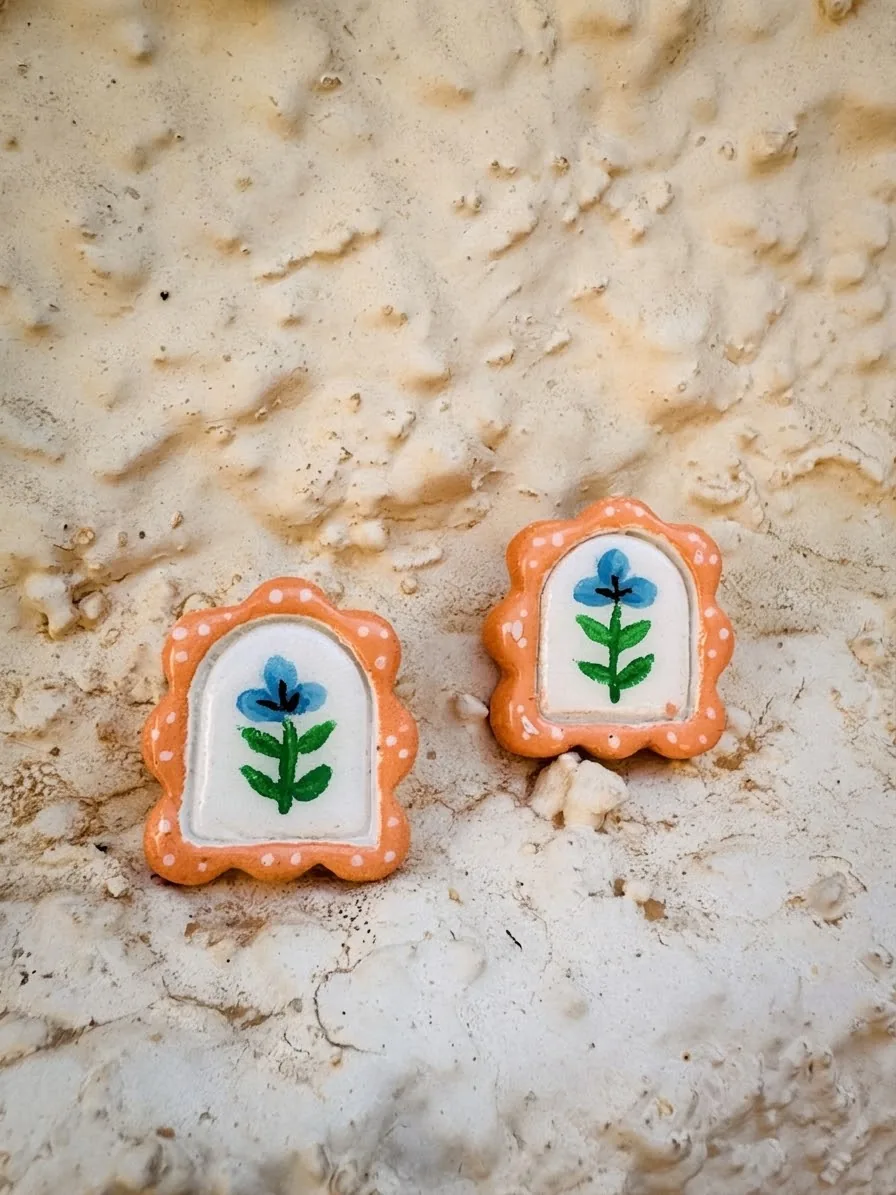
Sustainability usually gets talked about in the abstract — better materials, lower emissions, less packaging. At Papira it comes down to two much more concrete things: what actually happens in the studio while a piece is being made, and what happens to that piece years later, once it's done being worn.
Über Nachhaltigkeit wird meist abstrakt gesprochen — bessere Materialien, weniger Emissionen, weniger Verpackung. Bei Papira geht es um zwei sehr konkrete Dinge: was im Studio tatsächlich passiert, während ein Stück entsteht, und was mit diesem Stück Jahre später passiert, wenn es nicht mehr getragen wird.
Low-waste by design
Wenig Abfall von Anfang an
None of the paper used at Papira starts out as new paper. Every base shape begins as scrap — leftover sheets, offcuts, paper that would otherwise go straight into recycling — soaked down and reworked into pulp. Buying paper specifically to turn into jewelry was never really the plan; using what already existed was.
Kein Papier bei Papira beginnt als neues Papier. Jede Grundform startet als Altpapier — übrig gebliebene Bögen, Verschnitt, Papier, das sonst direkt im Altpapier gelandet wäre — eingeweicht und zu Brei verarbeitet. Extra Papier zu kaufen, nur um daraus Schmuck zu machen, war nie der Plan — das zu nutzen, was ohnehin schon da war, schon eher.
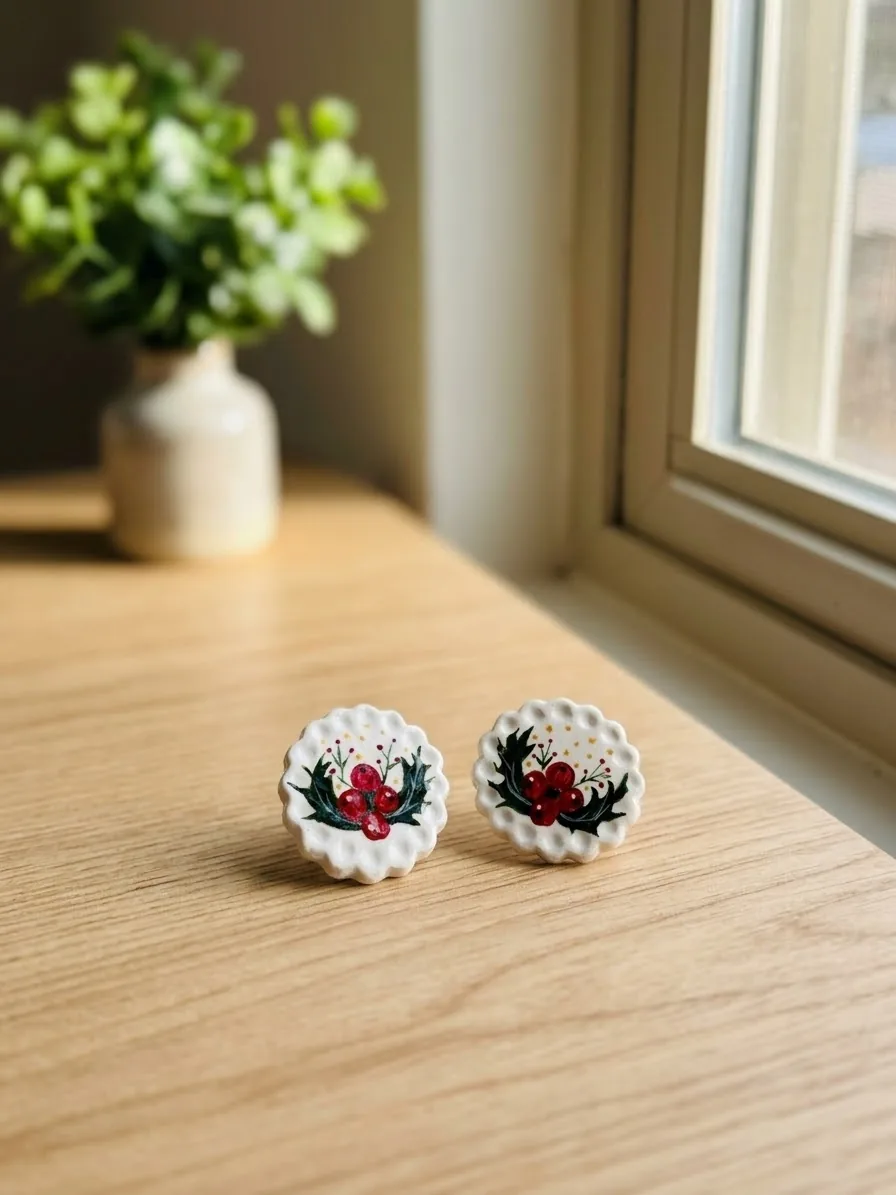
The same logic carries into the workshops. Offcuts from one guest's earring often become the base of the next demo piece, and pulp mixed a little too generously for one session doesn't get thrown out — it goes into a jar and waits for the next one. Nothing about the process is designed to be precious with material; it's designed to not waste it.
Dieselbe Logik gilt in den Workshops. Reste vom Ohrring eines Gastes werden oft zur Grundlage für das nächste Demonstrationsstück, und Papierbrei, der für eine Sitzung etwas zu großzügig angerührt wurde, landet nicht im Müll — er kommt ins Glas und wartet auf die nächste Runde. Der Prozess ist nicht darauf ausgelegt, sparsam mit Material umzugehen aus Prinzip — sondern schlicht darauf, nichts davon zu verschwenden.
What happens when it's done
Was passiert, wenn es fertig getragen ist
Most jewelry is built to outlast its owner, whether anyone wants it to or not — metal doesn't rust away in a drawer, and resin barely breaks down in a landfill for centuries, if ever. Paper is the opposite. At the end of a papier-mâché earring's life — once a hook breaks, or a piece is simply done being worn — its paper core will actually decompose, unlike the metal earrings sitting next to it in the same drawer.
Die meisten Schmuckstücke sind darauf ausgelegt, ihre Besitzerin zu überdauern, ob gewollt oder nicht — Metall rostet nicht einfach in der Schublade weg, und Harz zersetzt sich auf einer Deponie kaum, wenn überhaupt, selbst nach Jahrhunderten. Papier ist das Gegenteil. Am Ende des Lebens eines Pappmaché-Ohrrings — wenn ein Haken bricht oder ein Stück einfach nicht mehr getragen wird — zersetzt sich sein Papierkern tatsächlich, anders als die Metallohrringe in derselben Schublade.
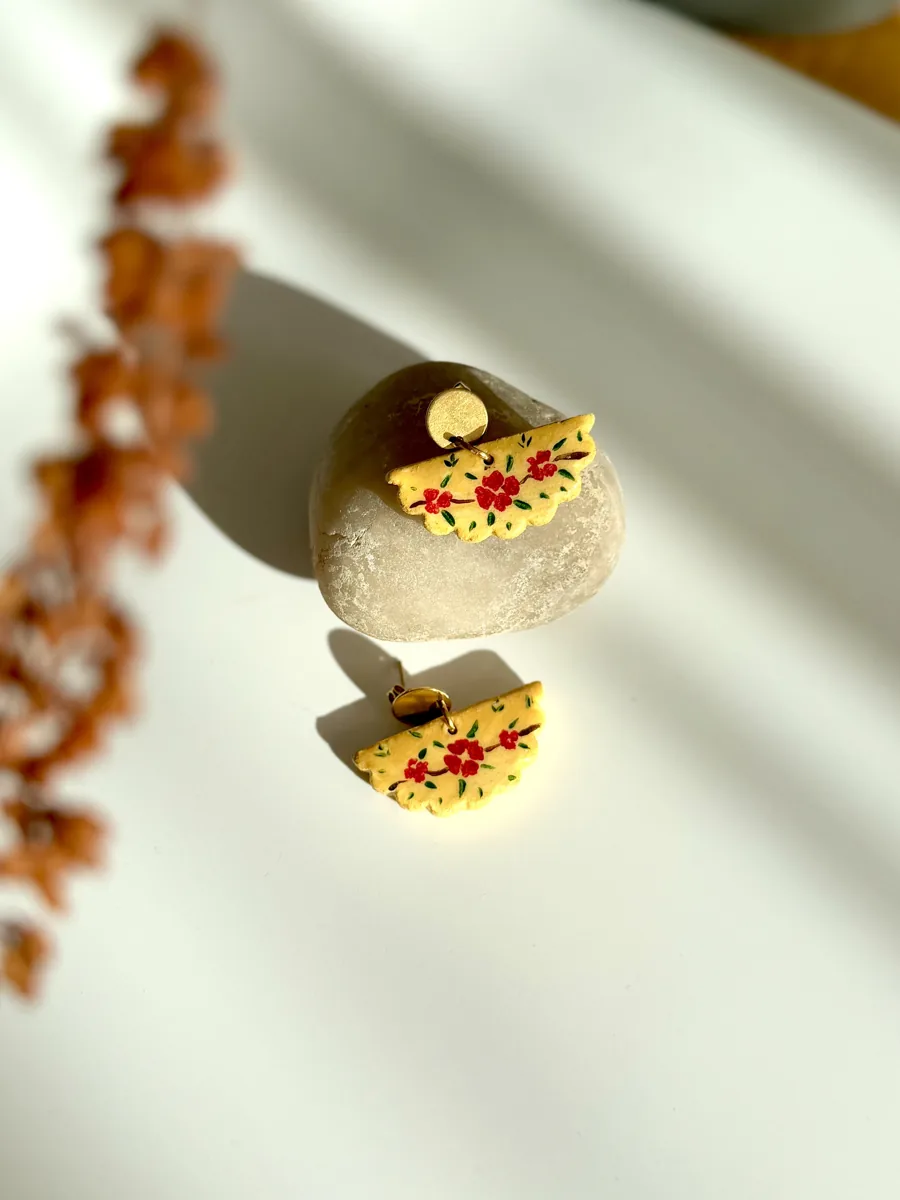
That's not a reason to treat a paper earring as disposable — quite the opposite, since the sealant and hand-painted finish are built to make each piece last for years of normal wear. It's more that when a piece does eventually reach the end of its life, it doesn't leave much behind. Low-waste going in, low-impact going out.
Das ist kein Grund, einen Papierohrring als Wegwerfartikel zu behandeln — im Gegenteil, Versiegelung und Handbemalung sind darauf ausgelegt, dass jedes Stück viele Jahre normalen Tragens übersteht. Es bedeutet eher, dass ein Stück, wenn es irgendwann doch das Ende seines Lebens erreicht, kaum etwas hinterlässt. Wenig Abfall beim Entstehen, wenig Spuren beim Vergehen.